chat Customized Solution
Ultra High-Temperature heating element

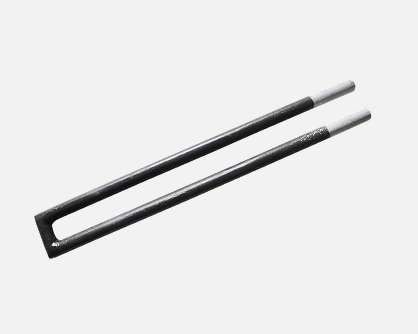
Silicon Carbide (SiC) Heating Elements

High-Temperature Electric Heating Solutions for Industrial Furnaces & Thermal Processes Extreme Temperature Capability. Superior Durability. Proven Industrial Performance.

Global Manufacturers
Customized Solution

Description

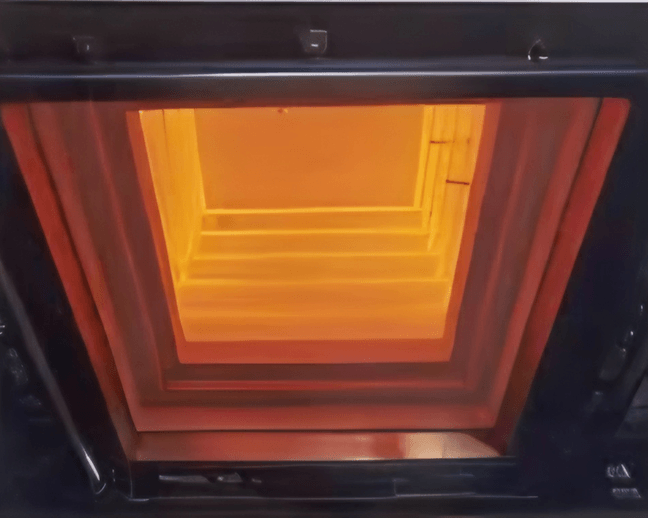
Silicon Carbide (SiC) heating elements are high-performance ceramic electric heaters designed for operation in extreme temperature environments, typically in industrial furnaces and thermal processing systems.
Manufactured from high-purity silicon carbide through high-temperature recrystallization processes, these elements provide exceptional thermal conductivity, oxidation resistance, and long-term stability, making them a preferred solution for demanding industrial applications.

SiC heating elements are widely used where conventional metallic heaters cannot operate reliably, particularly in applications exceeding 1000°C and up to ~1600–1625°C.

At Isratherm Industrial Solutions, we supply silicon carbide heating elements from leading global manufacturers offering both standard geometries and fully customized designs for high-temperature processes.

Advantages

Extremely High Operating Temperature

Capable of continuous operation up to ~1600°C+ In oxidizing atmospheres.

Excellent Oxidation Resistance

Forms a protective silicon dioxide (SiO₂) layer at high temperatures, preventing degradation

High Thermal Conductivity

Enables fast heat-up and uniform temperature distribution.

Long Service Life

Resistant to deformation, oxidation, and chemical attack under proper operating conditions.

Chemical & Corrosion Resistance

Performs well in aggressive environments including acids, alkalis, and process gases.

Excellent Thermal Shock Resistance

Handles rapid heating and cooling cycles with minimal damage.

High Surface Load Capability

Supports higher watt densities compared to many metallic heating elements.

Industries

Chemical Industry

Technical Details

Material
Silicon Carbide (SiC)
Temperature Range
~600°C – 1625°C
Power Supply
110V – 480V
Diameter
8-65 mm
Length
100-6000mm
Shapes
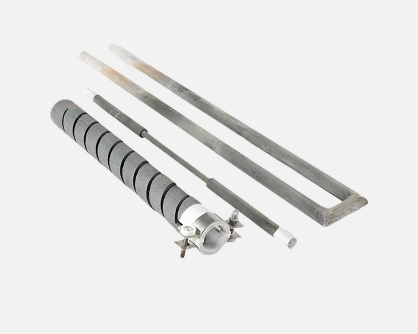
Rod / U / W / Spiral / Multi-leg
Resistance Behavior
Temperature-dependent
Atmosphere
Air / controlled atmospheres
Installation
Horizontal / vertical
Typical Applications

SiC heating elements are primarily used in:

Industrial Furnaces

Heat treatment furnaces■

Sintering furnaces■

Annealing furnaces■

Vacuum furnaces■

Ceramics & Glass Industry

Kilns■

Glass melting and forming■

Ceramic sintering■

Metallurgy

Powder metallurgy■

Metal processing■

Alloy production■

Semiconductor & Electronics

Diffusion furnaces■

Crystal growth systems■

Chemical Industry

High-temperature reactors■

Catalyst processing■

Standard Element Types

SiC heating elements are available in multiple configurations:

Straight Rod (RR / ED Type)
Simple design■
Used in basic furnace layouts■

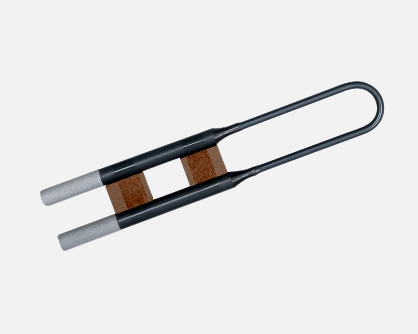
U-Type / Hairpin
Both terminals on one side■
Easy installation■

W-Type / Multi-Leg
Compact high-power design■
Suitable for high-load furnaces■

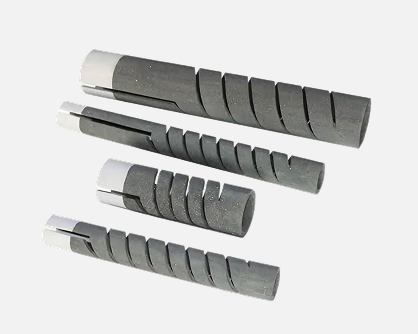
Spiral / Helical Elements
Increased surface area■
Improved efficiency■

DB / Double Rod Type
Optimized for uniform heating■
Reduced terminal losses■

Different geometries allow optimization of power distribution, temperature uniformity, and furnace design.

Construction & Materials

SiC elements are manufactured from:
High-purity silicon carbide (>99%)●
Recrystallized or reaction-bonded structures●
Dense ceramic bodies with low porosity●

They typically include:
Hot zone (heating section)●
Cold ends (lower resistance terminals)●
Metalized contact areas●

The hot zone is engineered for maximum thermal output, while cold ends reduce electrical losses

Engineering Considerations

Operating Temperature
Must be matched to element type and atmosphere.

Atmosphere
Oxidizing vs. reducing environments affect lifespan.

Electrical Design
Resistance increases over time — must be considered in power supply design.

Aging Behavior
SiC elements gradually increase in resistance during operation.

Mechanical Handling
Brittle ceramic, requires careful installation.

Power Control
Often used with:
Thyristor (SCR) control●
PID temperature control●
Multi-zone systems●

How SiC Heating Elements Work

Silicon carbide elements operate based on electrical resistance heating:
Electrical current passes through the SiC body■
The material’s resistivity generates heat■
Heat is radiated and conducted into the furnace environment■
SiC behaves as a semiconductive material, with resistance changing as temperature increases, initially decreasing and then increasing at higher temperatures.

This unique behavior allows:
Stable high-temperature operation●
Controlled heating performance●
Compatibility with advanced control systems●

Customization Options

At Isratherm, we provide:
Custom dimensions and geometries■
High-power furnace solutions■
Multi-zone heating systems■
Special coatings for aggressive environments■
Integration with control systems■
Replacement solutions for existing furnaces■

Why Choose Isratherm?

Supply from top-tier global manufacturers■

Expertise in high-temperature process heating■

Application-based engineering approach■

Support for furnace design and upgrades■

Reliable, long-life heating solutions■

FAQ

What is a SiC heating element?

A ceramic electric heater designed for very high temperatures.

What is the maximum temperature?

Up to ~1600–1625°C depending on design.

Where are they used?

Furnaces, kilns, and high-temperature processes.

What is the advantage over metal heaters?

Much higher temperature capability and longer life in extreme conditions.

Do they degrade over time?

Yes, resistance increases gradually (normal behavior).

Can they be customized?

Yes, most applications require tailored designs.

Skip to content
Cookie settings
We value your privacy
We use cookies to enhance your browsing experience, serve personalised ads or content, and analyse our traffic. By clicking "Accept All", you consent to our use of cookies.